
This was not on my bucket list. Nor was it even on my radar. While standing amongst my friend’s cute, fuzzy, stuffed toy resembling, Alpacas she invited me to the shearing to be held months away.
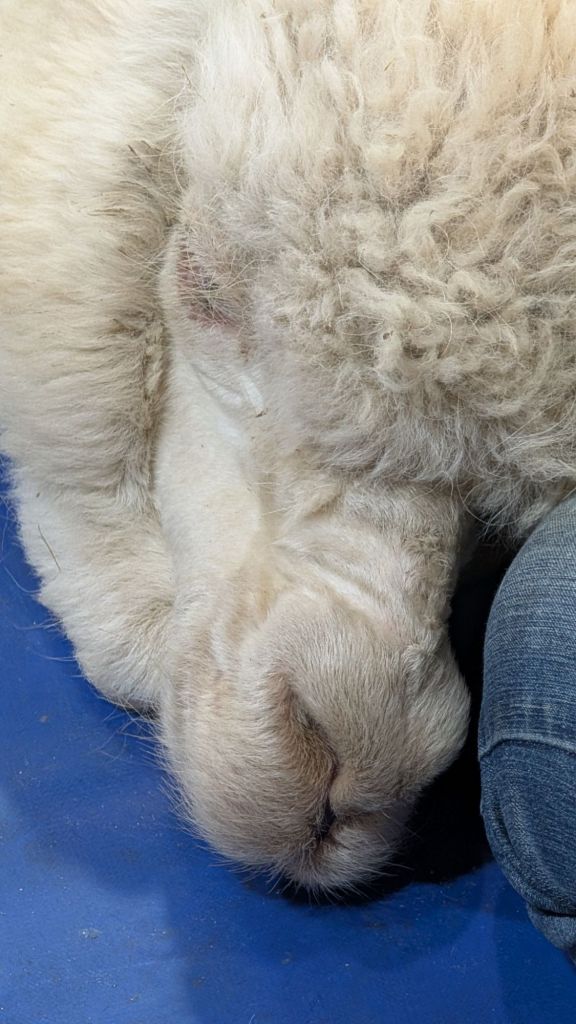
I was forwarned about the process. And, was expecting trauma and pig-like screaming.

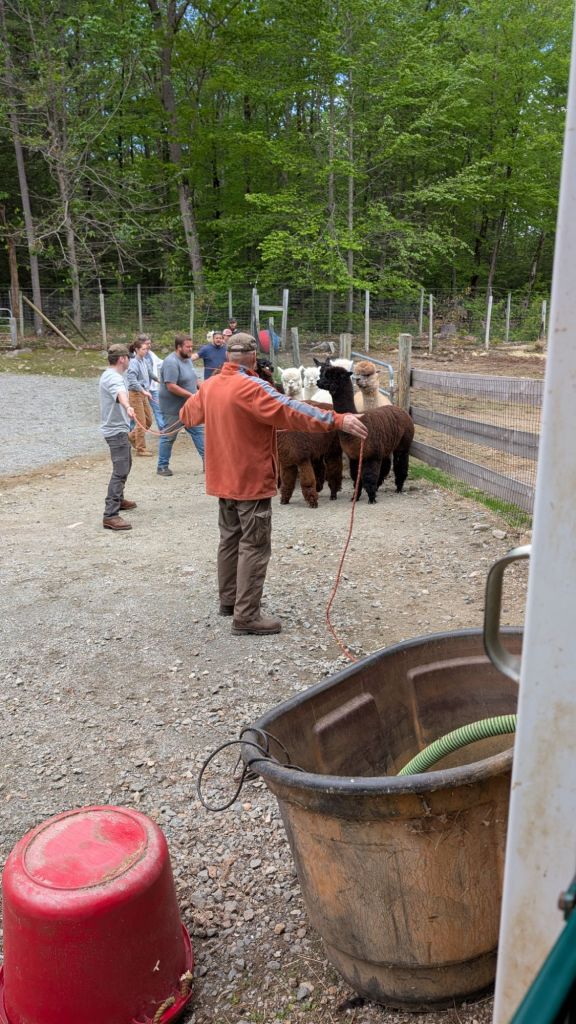
The first order of business; corral the fuzzy creatures into the run in.
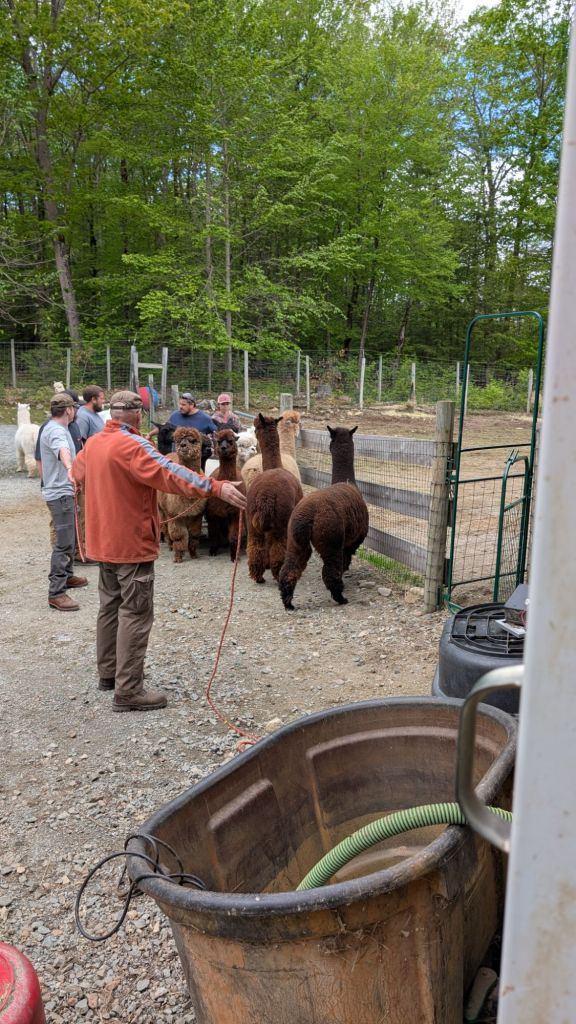
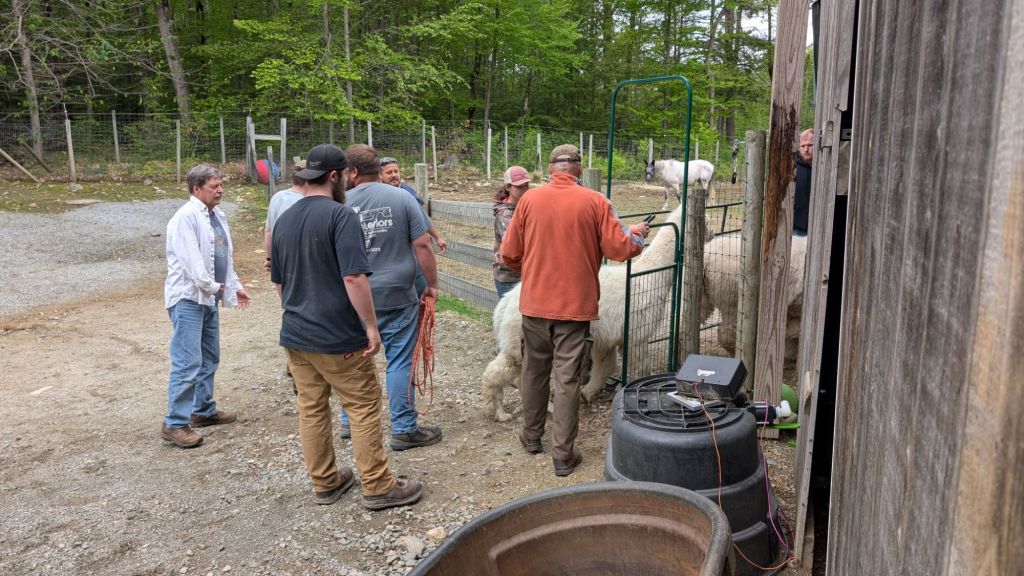


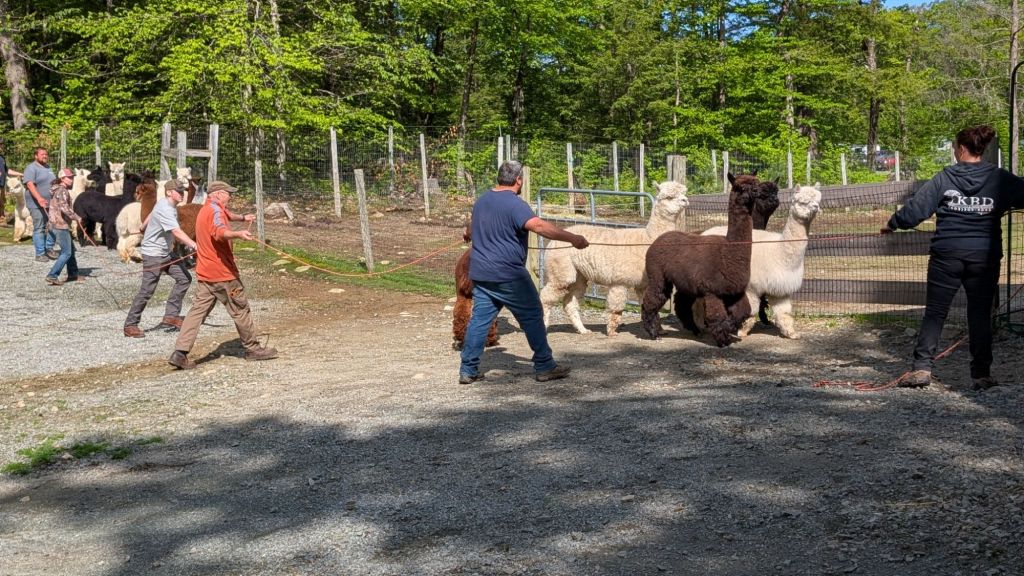


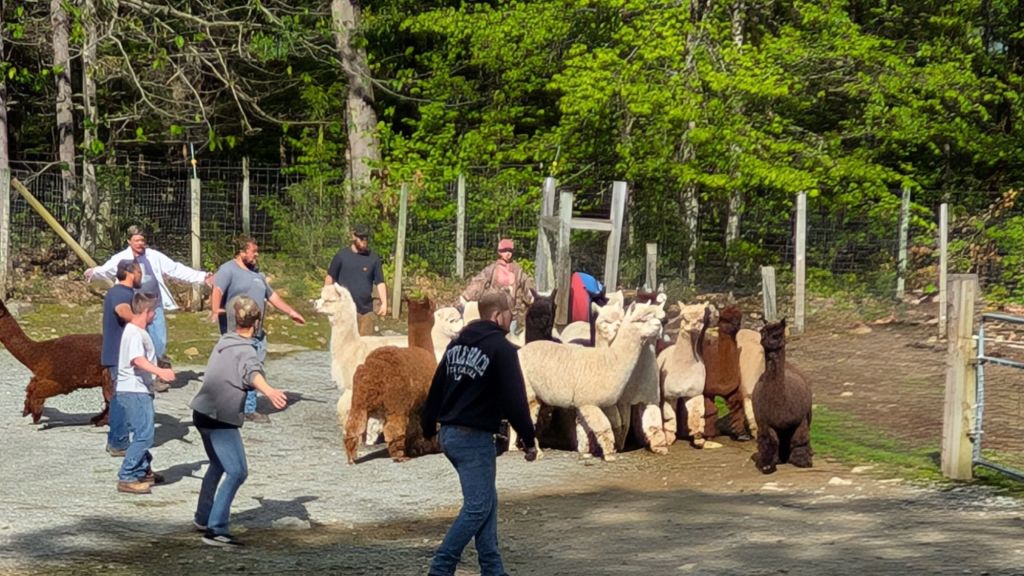
Once in the run in, they are “blown” to remove as much dust and flotsum as possible This saves the clipper blades.

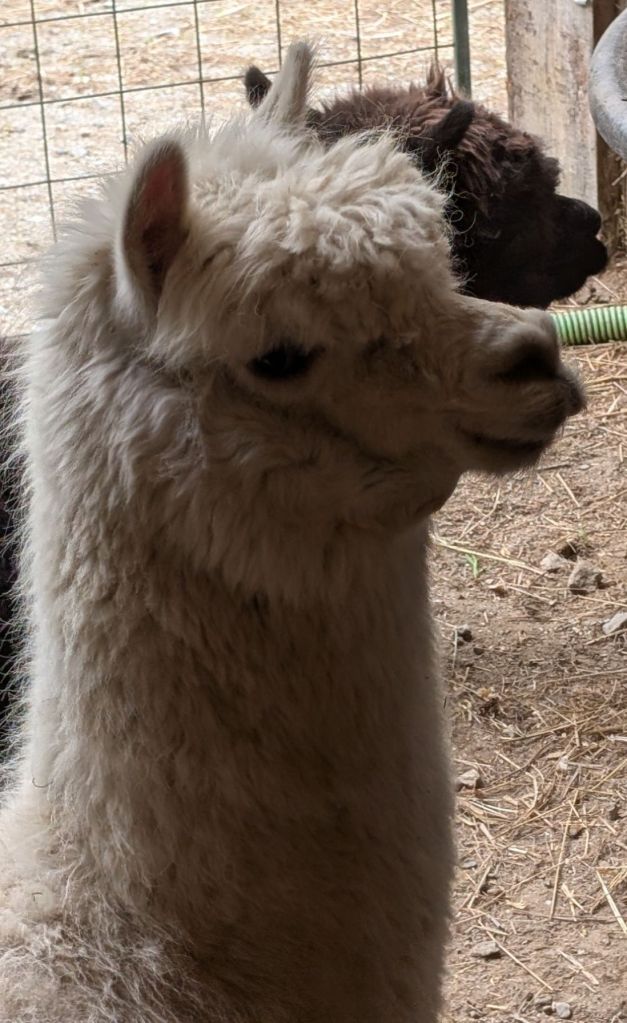

After being prepped they are guided into the clipping area.


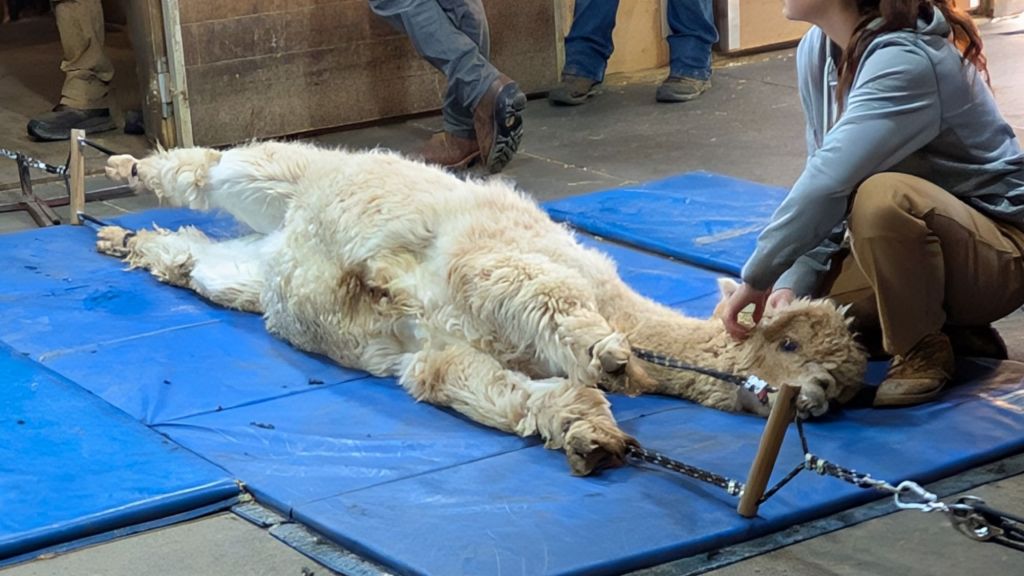
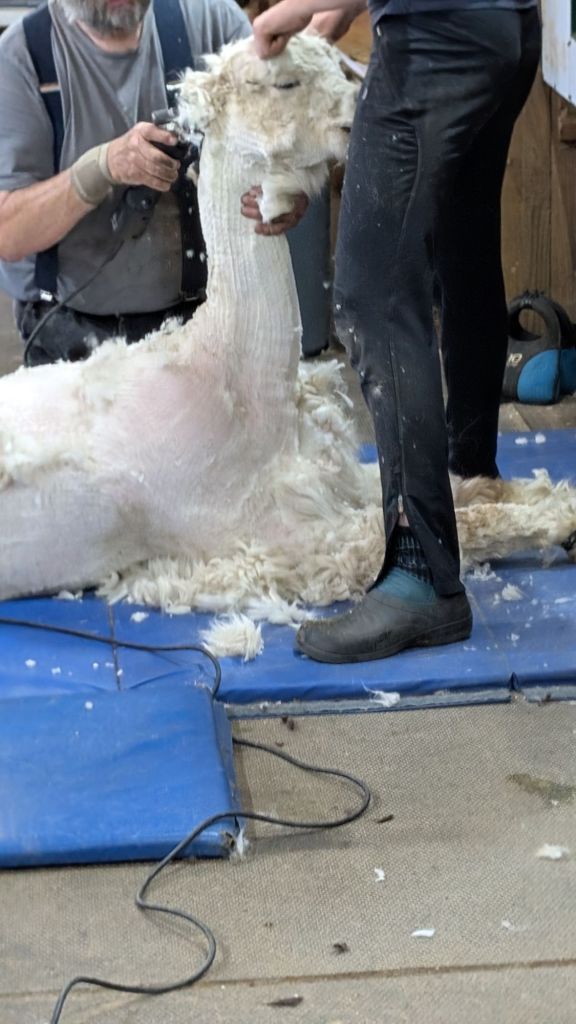
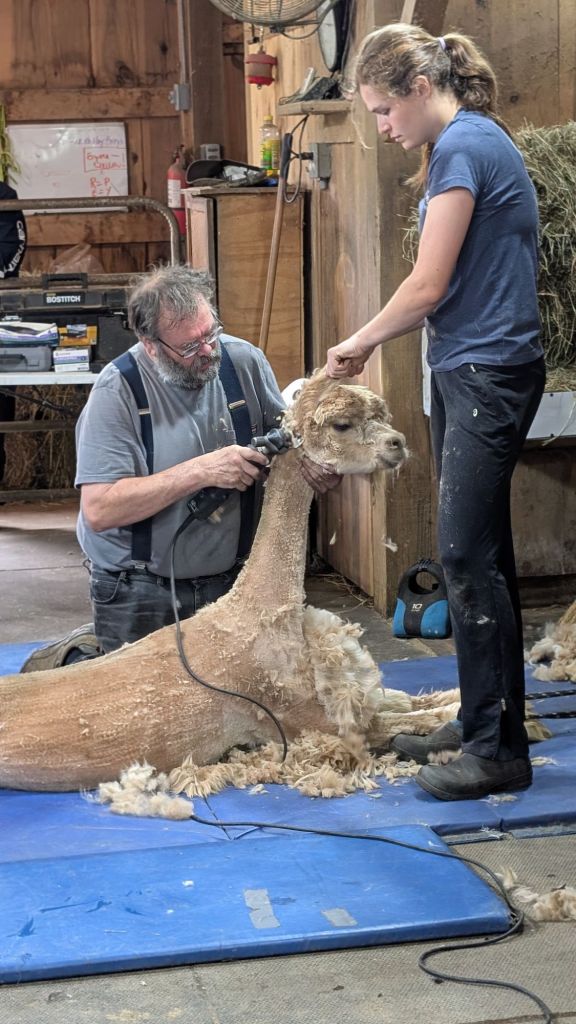
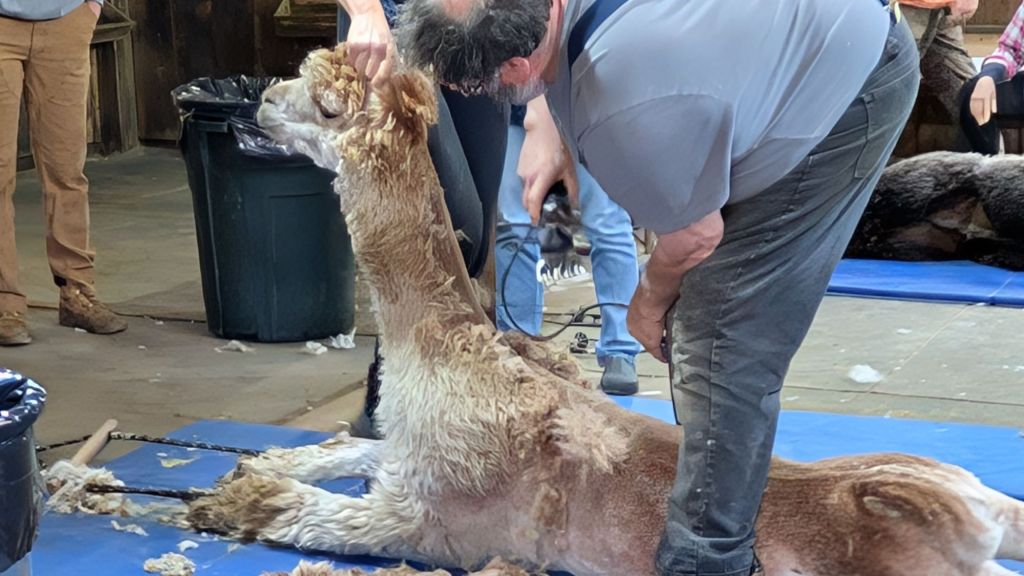
They are laid on the mats and the safety straps are attached.


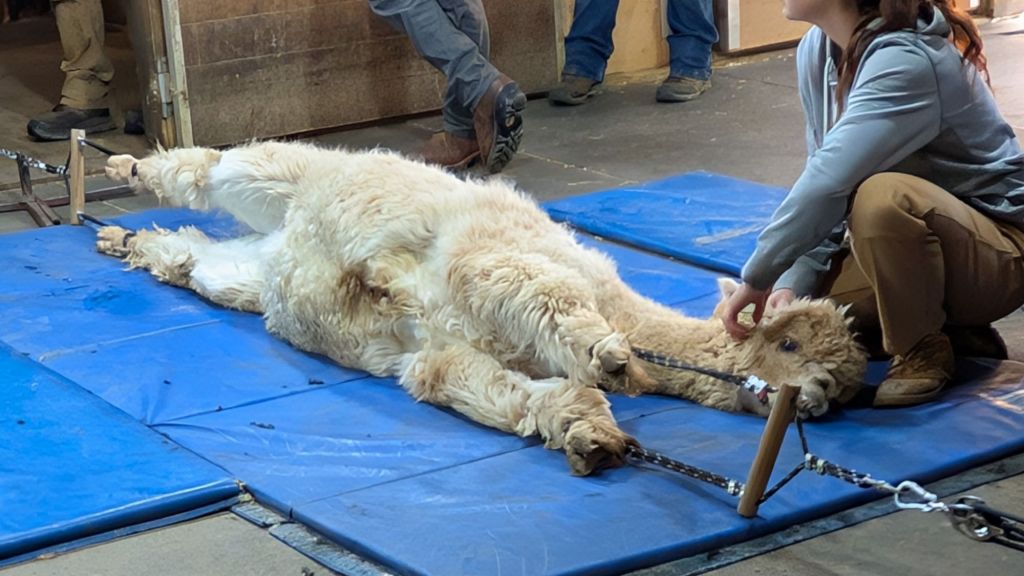
If needed, a vet check can also be done.
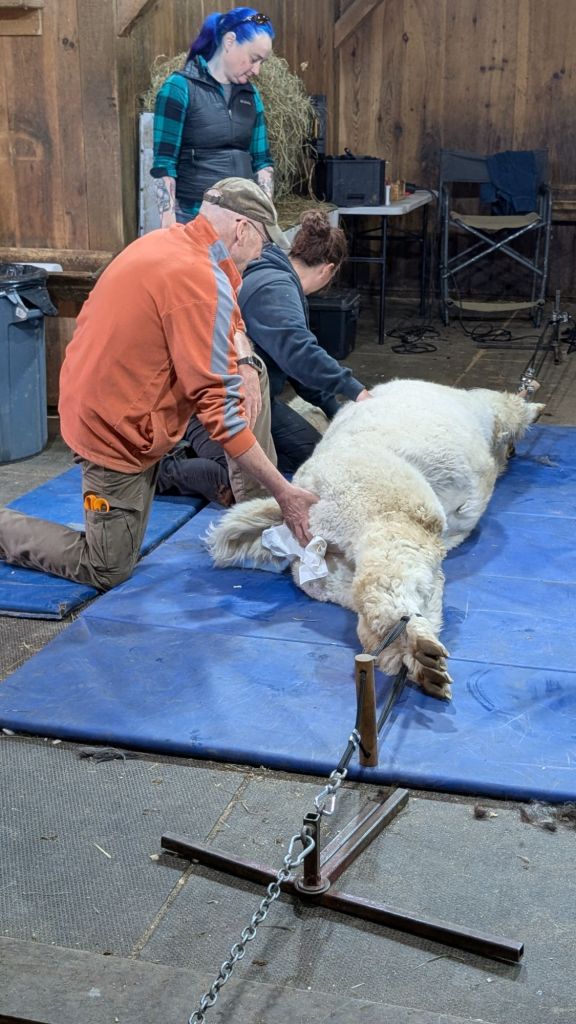
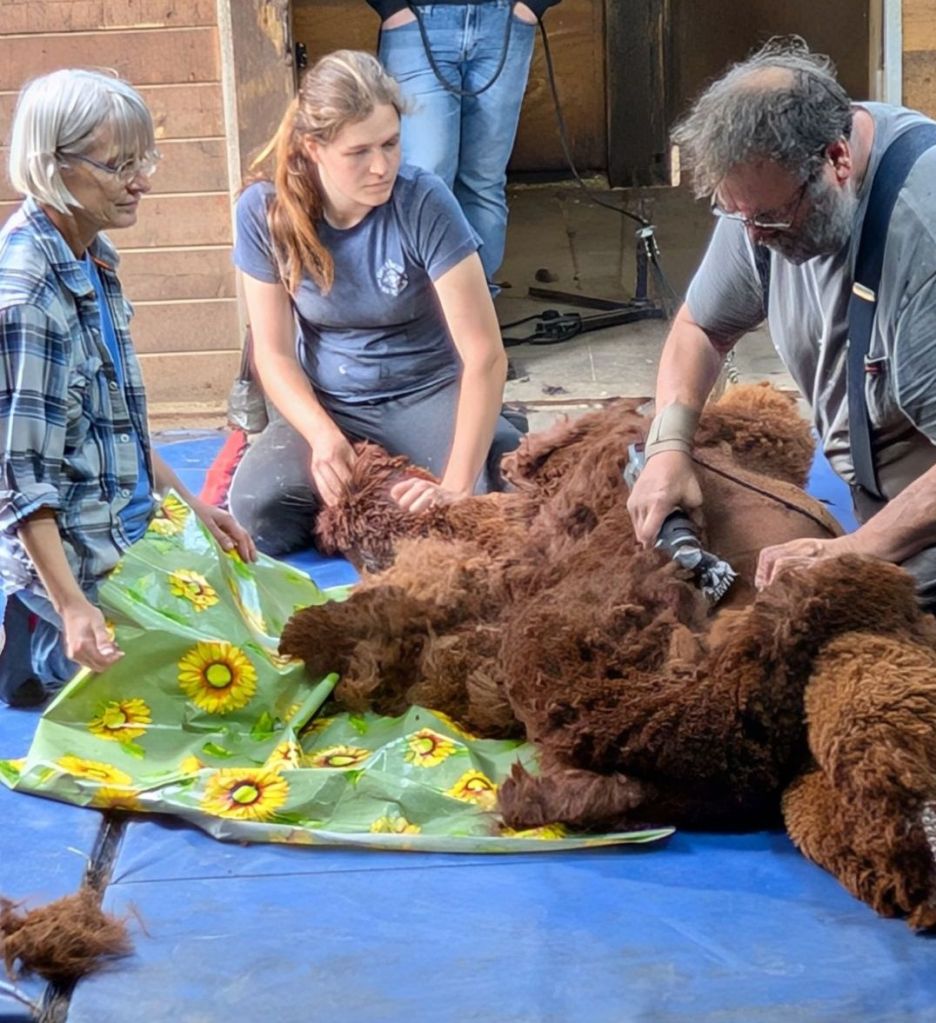
Then the clipping begins. It takes about 6 minutes. Tablecloths are positioned to catch the wool for spinning and knitting. I learned the back wool is the best followed by the neck. Belly wool, rightly so, is tougher, as is the leg wool. This is often discarded. If you want permanent mulch, belly and leg wool does not break down easily.


The head holder also gets cuddle time.

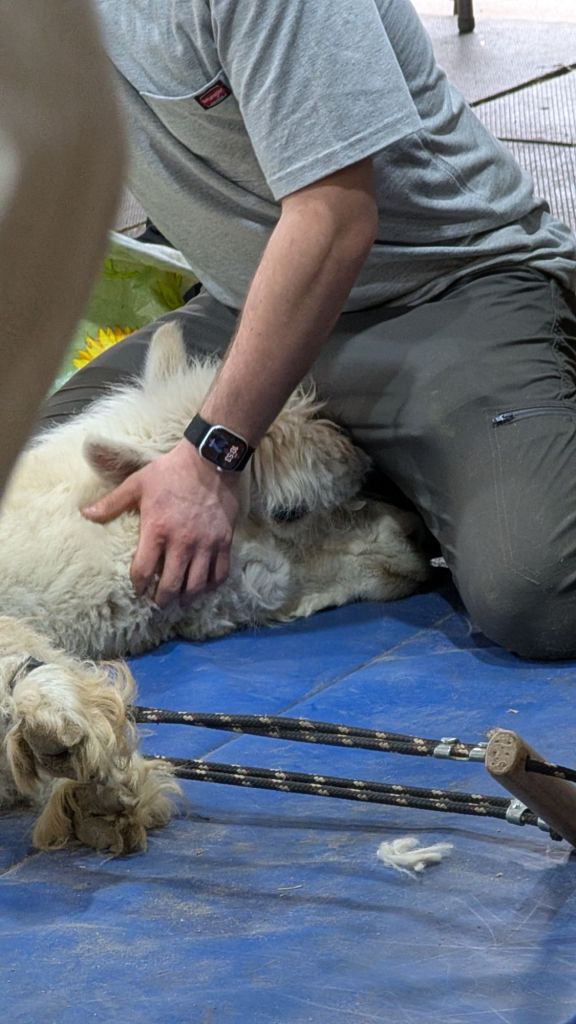

Alpacas have bottom teeth. As with my horses maintenance is required. Good thing they spit instead of bite!
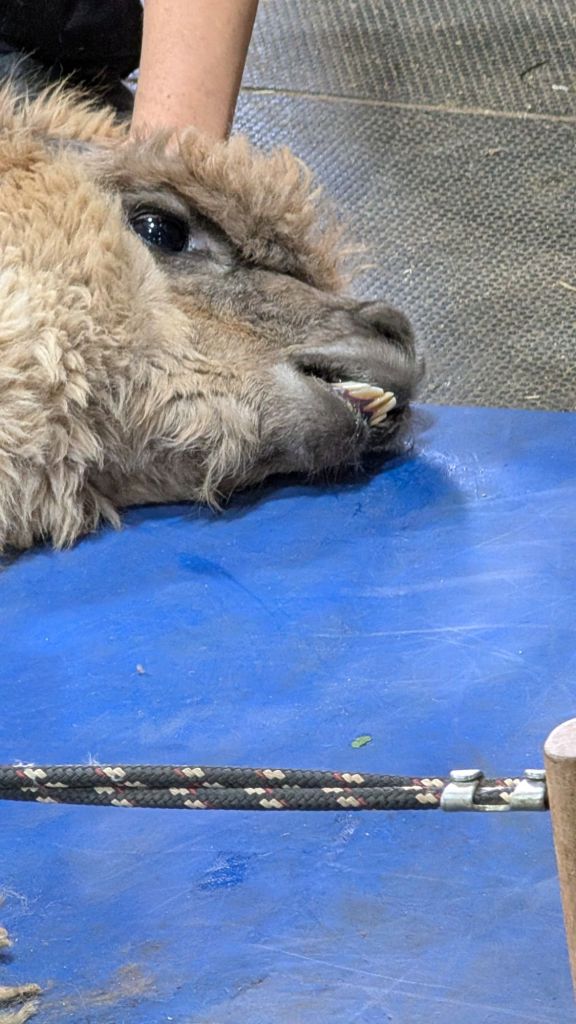

Most all were calm. There were a couple of drama queens.

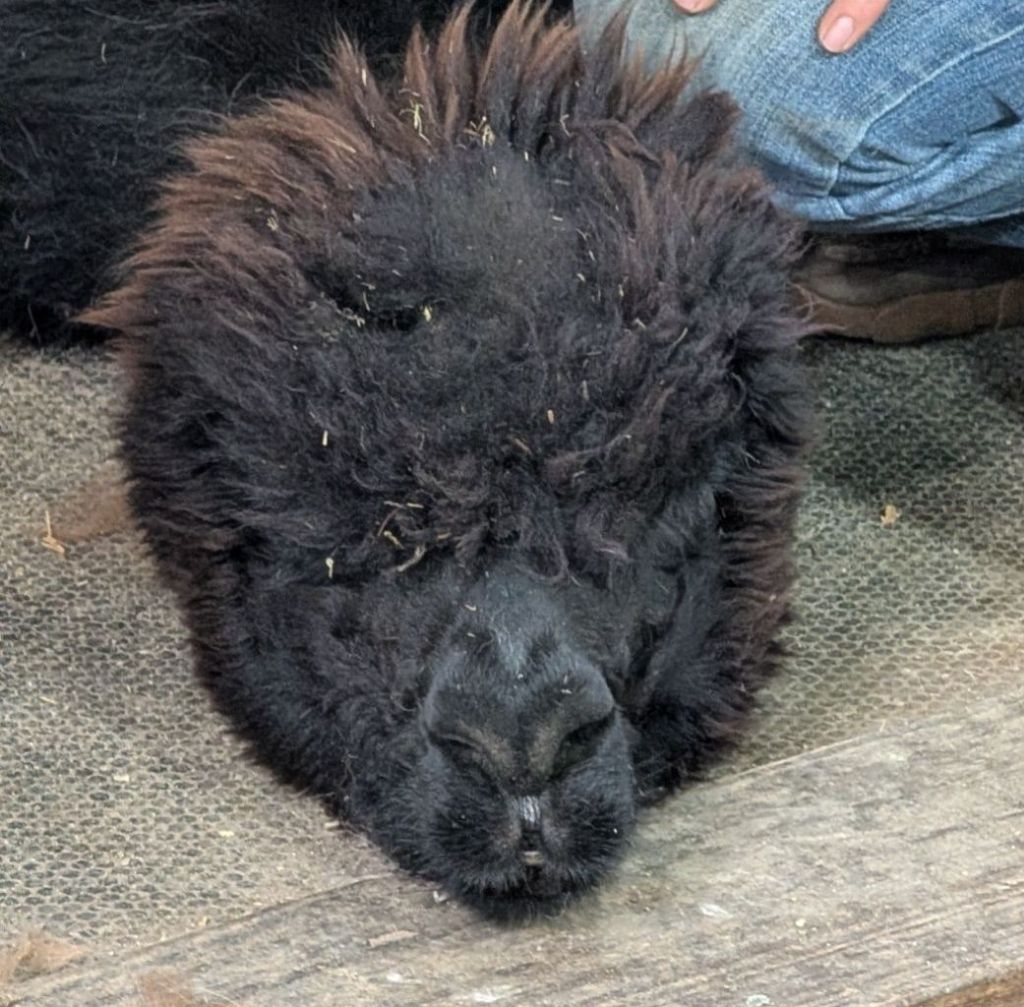
The wool, not to be saved gets swept up.


Watching the master clip these critters was mesmerizing. It was a ballet between the head holder animal and clipper.

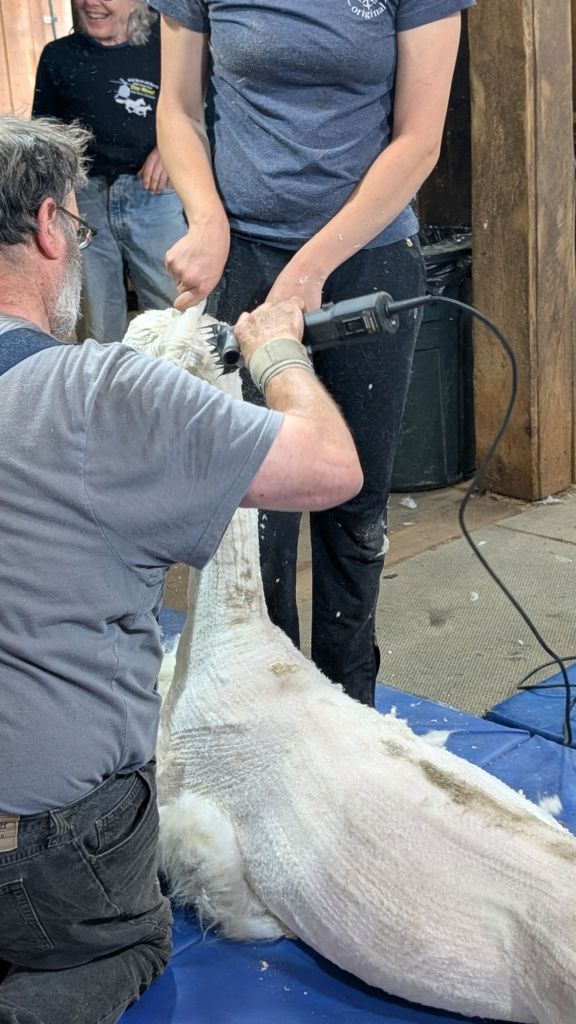
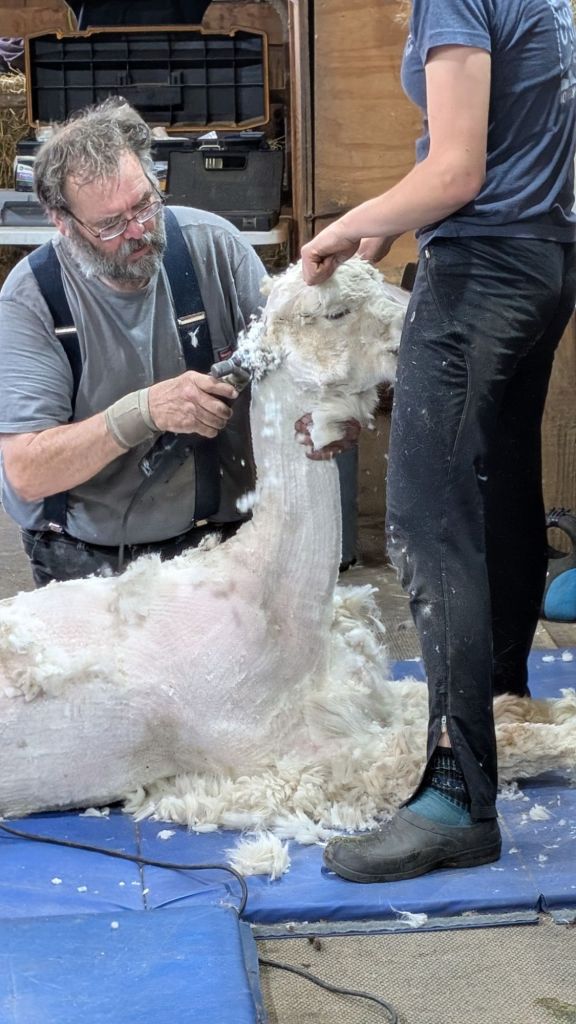
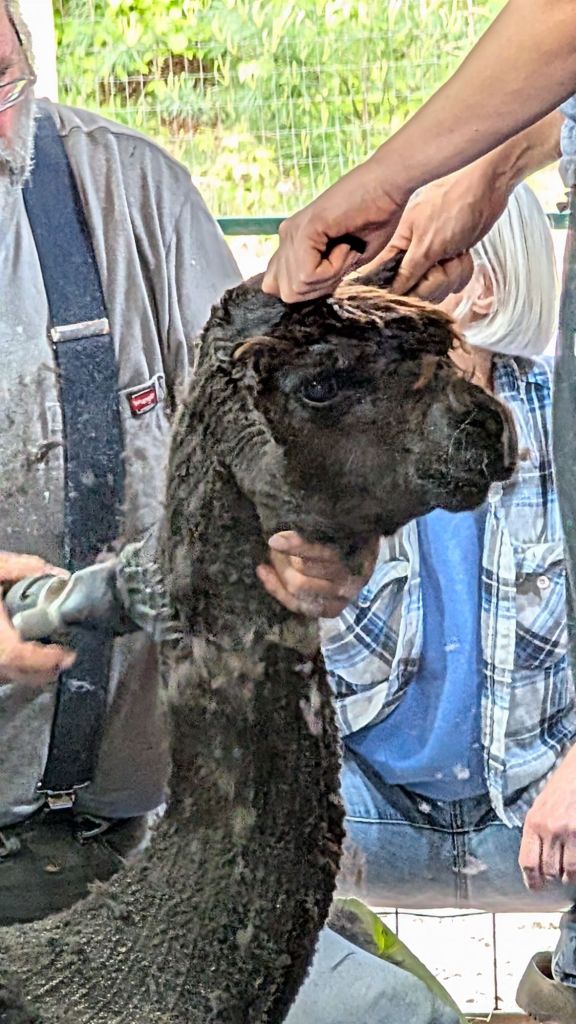
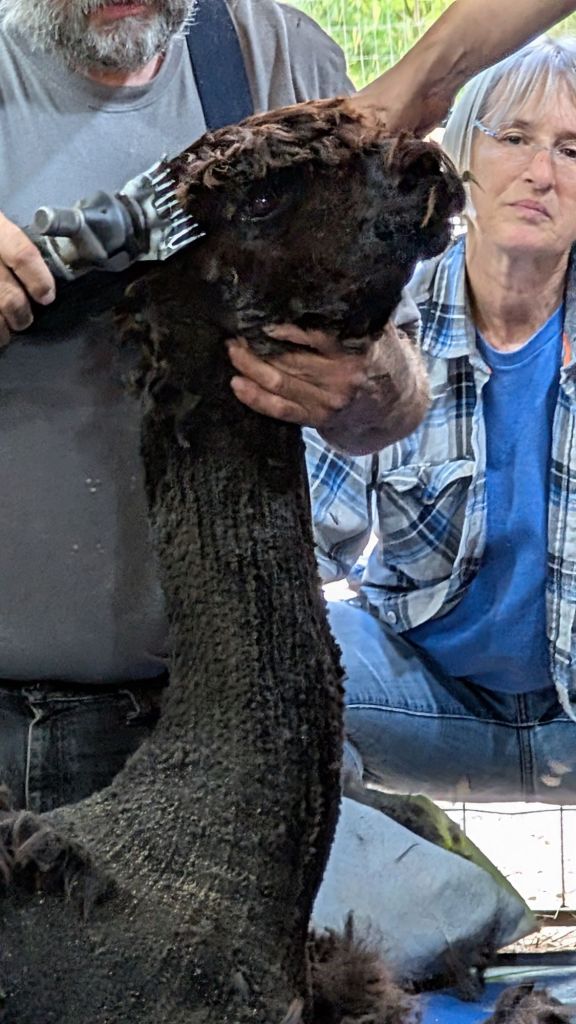


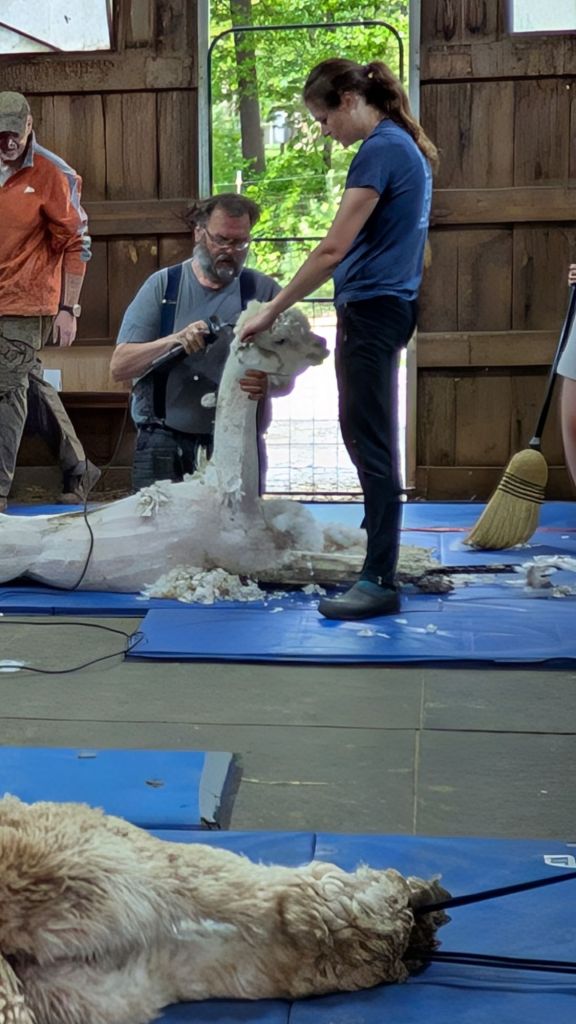


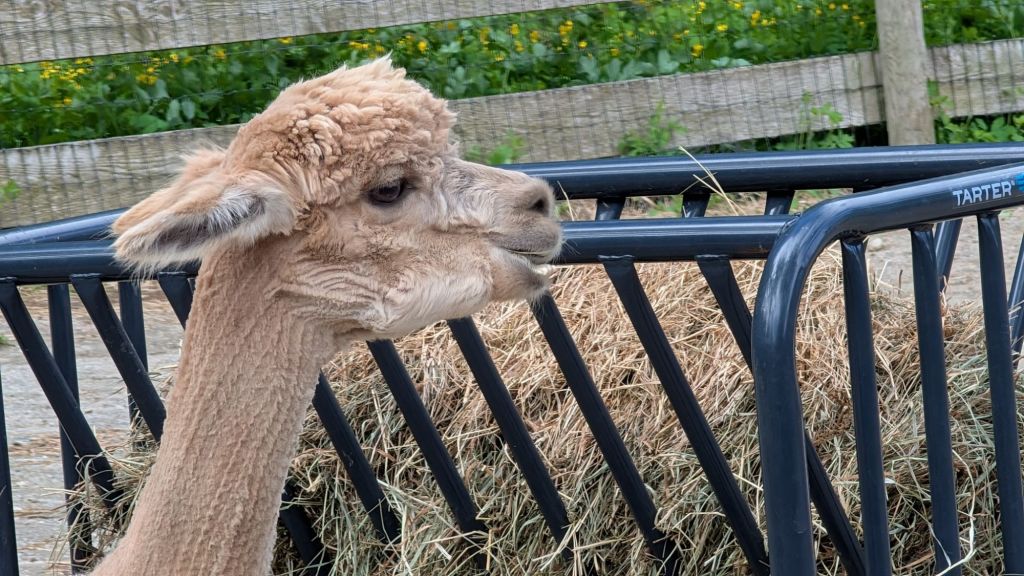
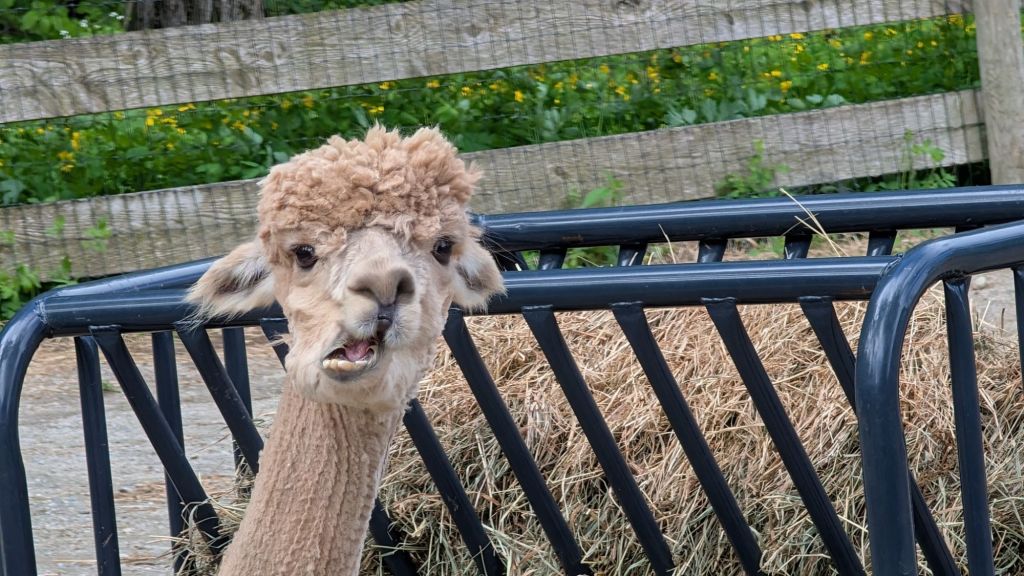
After they look so small.

It is obvious from the reactions of those clipped, there is no trauma.
The spinning and knitting wool is taken to the loft to air.
























































 Self Employed Again